To understand tattoo shops in Columbus, Ohio, you first have to understand the city itself. We'll start there so establish some context for our little Columbus tattoo history adventure.
Columbus, Ohio wasn’t built as a port town or a railroad boom hub like Cincinnati or Cleveland.
It was founded in 1812 as a planned state capital—government-forward, conservative by design, and slow to embrace fringe or countercultural movements. Tattooing didn’t arrive here early, loudly, or proudly. It arrived quietly, worked its way into basements, back rooms, and biker shops, and earned its place over decades.
That slow burn is exactly why Columbus now has one of the most diverse and technically strong tattoo scenes in the Midwest.
Columbus Before Tattoo Shops
(1800s–Early 1900s)
 In the 19th century, tattoos in central Ohio existed, but not in the way we think of tattoo shops today.
Tattoos were primarily associated with sailors, soldiers, traveling carnivals, and circus performers—and Columbus, being landlocked and politically conservative, wasn’t a hotspot.
That said, Columbus was a rail and military transit city, which mattered. Soldiers passing through Fort Hayes and later Camp Sherman (outside the city) brought tattoo culture with them. Early tattoos were done by hand, often in private homes or improvised setups, long before electric tattoo machines became common in the early 1900s.
There were no storefront tattoo studios in Columbus at this point—tattooing was informal, unadvertised, and growing very much underground.
Mid-20th Century: Tattooing Goes Underground (1940s–1960s)
 After World War II, tattooing expanded nationwide, but Columbus lagged behind coastal cities. Tattoos were still heavily stigmatized—associated with bikers, criminals, and “undesirable” subcultures. What did exist were:
-
Private tattooers working out of homes or garages
-
Shops tied loosely to motorcycle culture
-
Occasional street shops opening briefly, then closing under pressure
Health regulations were inconsistent, and tattooing wasn’t yet treated as a legitimate profession. Many early Columbus tattooers learned by apprenticeship—or trial and error—and kept a low profile to avoid attention.
This era laid the groundwork, but Columbus tattooing was still fragmented and largely invisible to the general public eye.
The 1970s–1980s: The First Real Tattoo Shops Appear
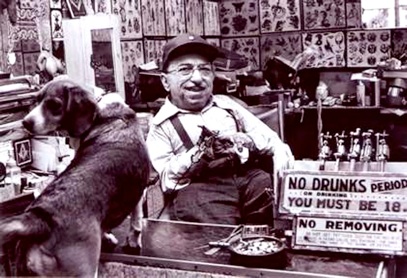 The modern Columbus tattoo scene begins to take shape in the 1970s and 1980s, when tattooing began slowly reentering public acceptance nationwide.
A few key shifts happened:
-
Electric tattoo machines became standard
-
Health codes and sterilization practices improved
-
Tattoo shops began opening as actual storefront businesses
These early Columbus shops focused heavily on American traditional tattooing—bold lines, limited color palettes, flash on the walls. Walk-ins were the norm. Custom work existed, but flash paid the bills. This was also the era where tattooers began training tattooers locally instead of relying on outside mentors, creating the first true Columbus tattoo lineage.
The 1990s: Tattoo Culture Takes Hold
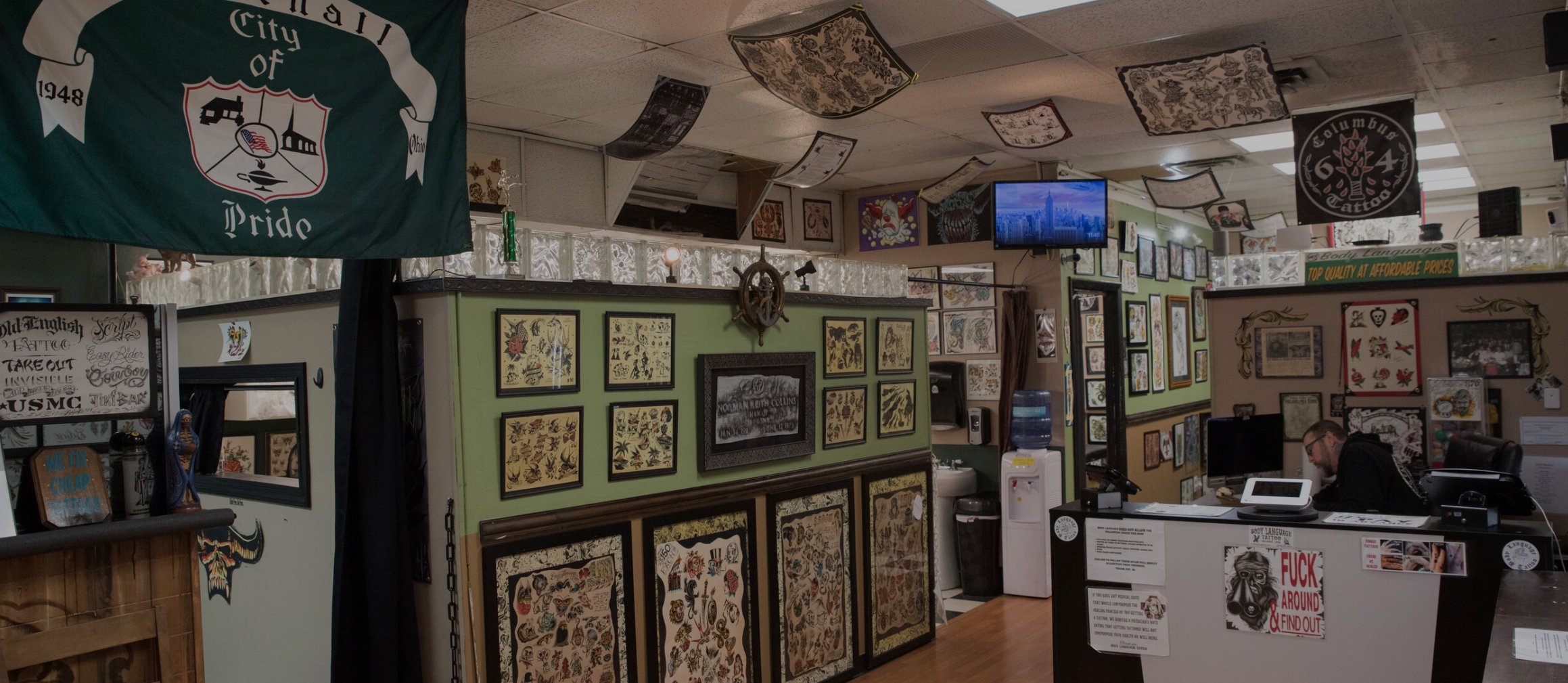 The 1990s were a turning point. Tattooing exploded into mainstream awareness through music, pop culture, and media. Columbus—now a growing college city with Ohio State University at its core—became fertile ground. Street shops multiplied along High Street and surrounding neighborhoods. Tattooing was no longer hidden. It was visible, accessible, and increasingly diverse in style. During this era:
- Walk-in culture thrived
- Apprenticeships became more structured
- Tattooing started attracting artists, not just technicians
This is also when many long-running Columbus tattooers got their start—artists who would later open shops, mentor others, and shape the city’s tattoo identity.
The 2000s: Professionalization and Style Expansion
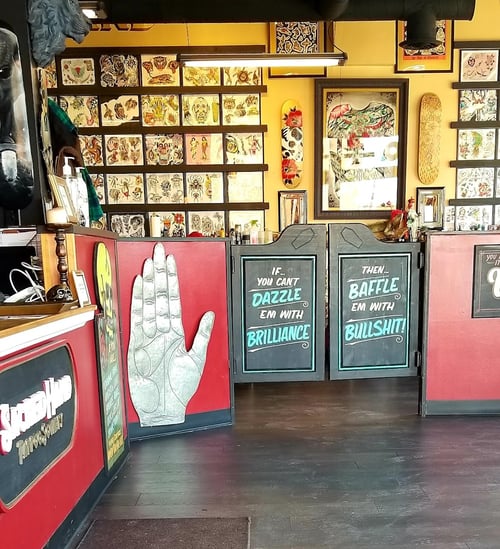
By the early 2000s, Columbus tattoo shops began to professionalize rapidly. Health department oversight increased. Shops invested in cleaner layouts, better equipment, and clearer booking systems. Styles expanded fast:
- Black and grey realism gained traction
- Portrait work became more common
- Japanese-influenced designs grew in popularity
- Custom tattoos started overtaking flash as the primary offering
Tattooing was no longer just a transaction—it became a collaborative process between artist and client. Columbus shops started attracting national attention, and guest artists from other cities began rotating through local studios.
The 2010s: Columbus Becomes a Tattoo Destination
The 2010s marked Columbus’s arrival as a serious tattoo city. Several things converged:
- Social media allowed artists to build followings without relying on shop location
- Clients became more educated about style, placement, and healing
- Tattoo studios diversified into private studios, appointment-only spaces, and artist collectives
This is when shops like RedTree Tattoo Gallery, Envy Skin Gallery, Sacred Hand Tattoo Society, Hollow Earth Tattoo, and others helped define modern Columbus tattoo culture—each with its own approach to space, booking, and artistic focus. Walk-ins still existed, but appointments, consultations, and long-term projects became the norm.
The 2020s–2025: Where Columbus Tattooing Is Now
 Today, Columbus tattoo shops reflect the city itself—diverse, creative, and no longer boxed into one identity. You’ll find:
- Traditional street shops with walk-in availability
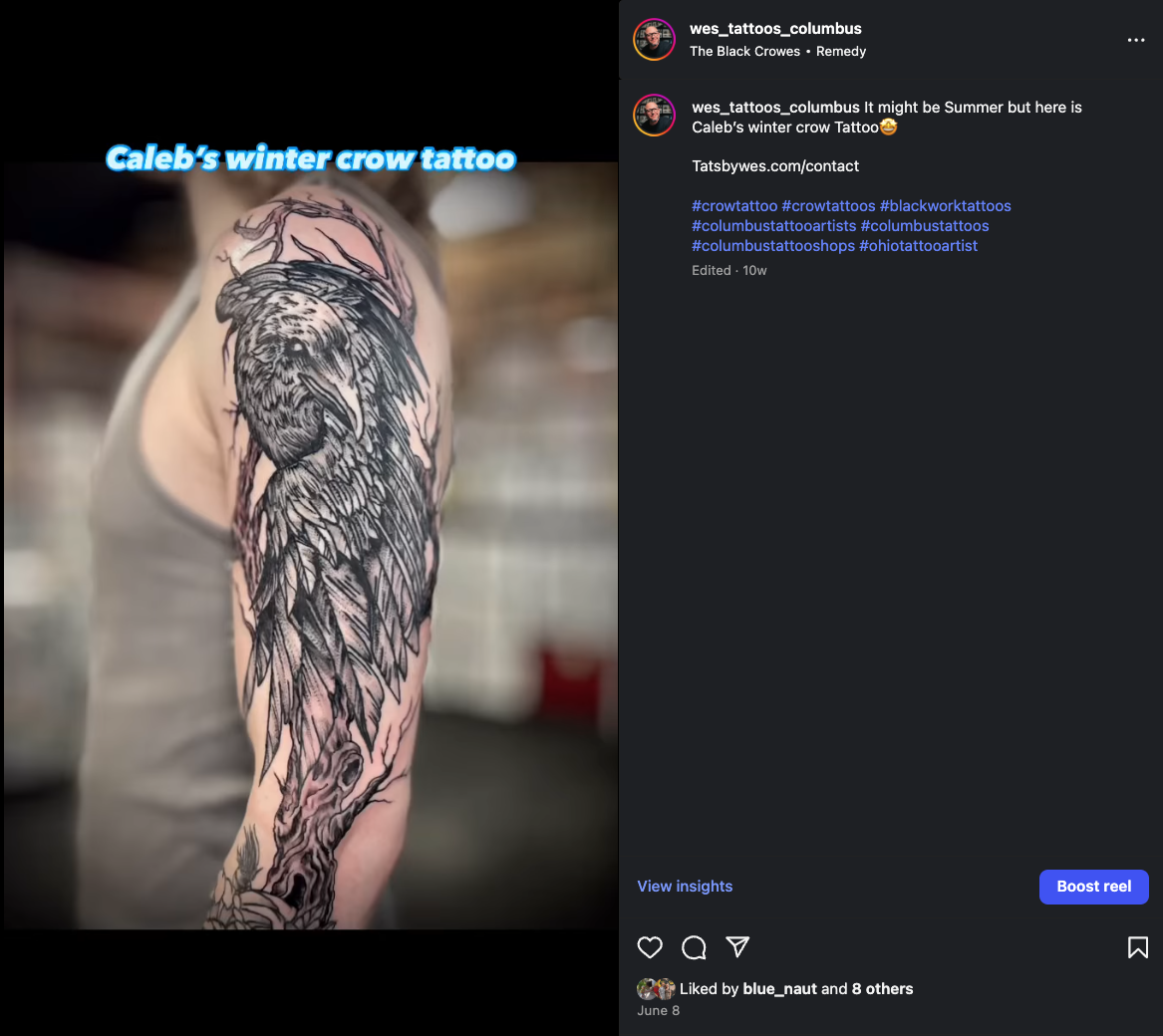
- Private studios focused on realism or blackwork
- Inclusive, artist-run collectives
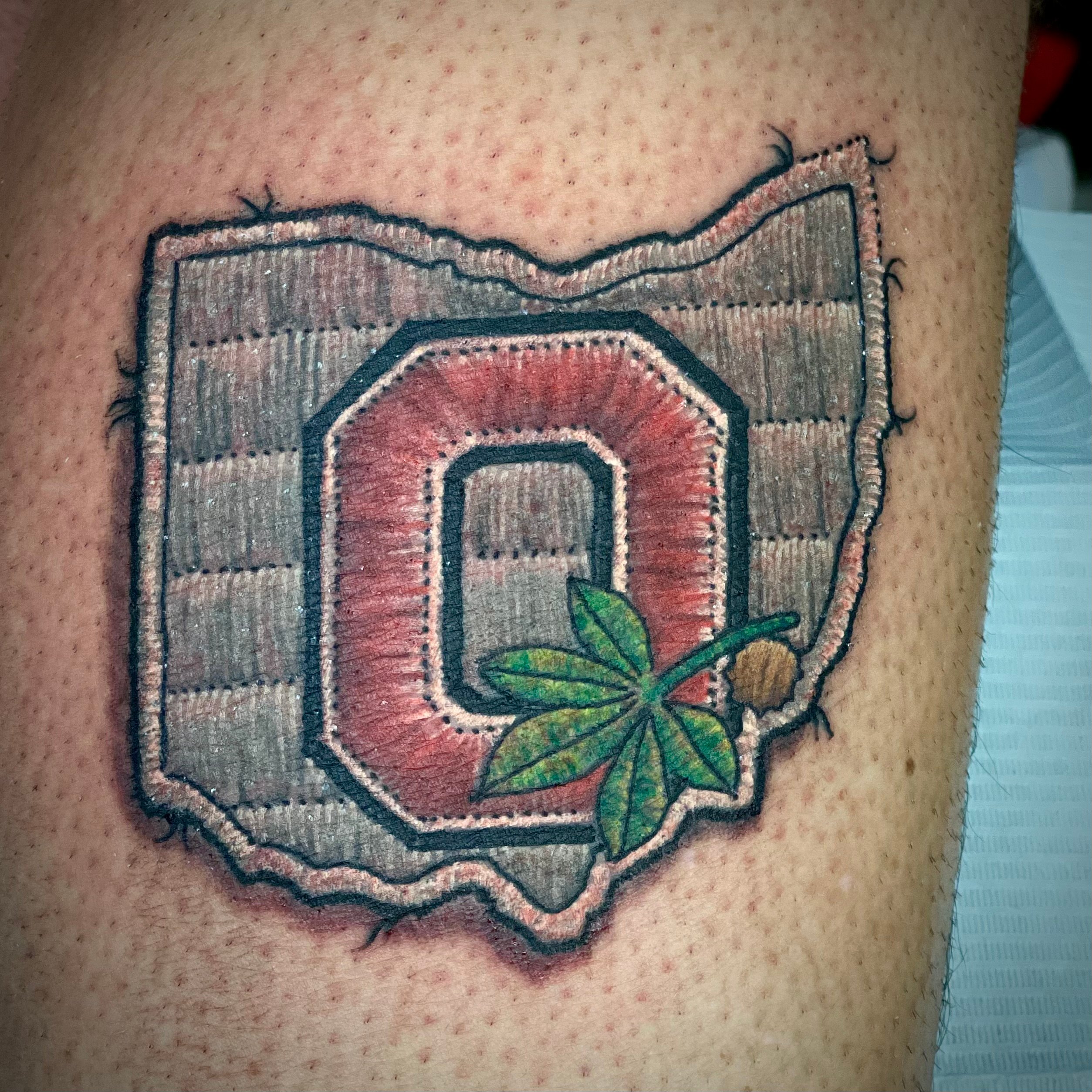
- Shops specializing in fine line, illustrative, patch-style, and experimental work
Tattooing is now fully integrated into Columbus culture. It’s no longer a rebellion—it’s a respected craft. Clients range from first-timers to collectors, and artists are just as likely to have formal art backgrounds as they are old-school apprenticeships.
Why Columbus’s Tattoo History Matters
Columbus didn’t become a tattoo city overnight—and that’s its strength. The scene wasn’t built on hype. It was built on decades of quiet consistency, apprenticeship, and adaptation.
From basement setups to respected studios, Columbus tattoo shops have earned their place the hard way—and that history is still visible every time you walk into a shop and sit in the chair.
This blog post is titled a "nearly" complete history because the entire Ohio Tattoo scene is still very much evolving. And, it's going to continue to evolve with the recent addition of Ohio-based Tattoo and Music Festivals like INKCarceration, held annually at the Mansfield State Reformatory.
If you have questions about Tattooing in the city, leave a comment or feel free to send me a DM to me on Instagram. If you're in the market for your next tattoo, why not schedule a free consultation!